
by blakelapides
Share
Share
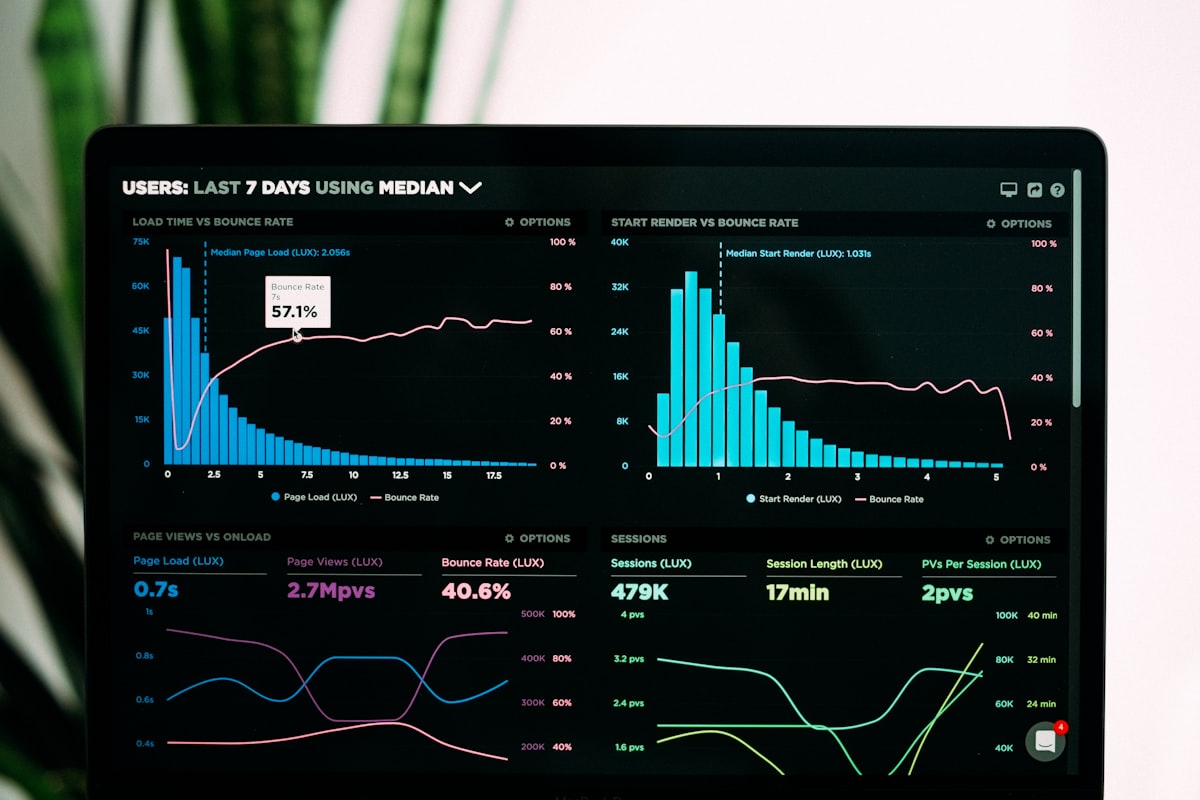
Every few years, someone declares SEO dead. It was dead when Google launched Panda. Dead again with Hummingbird. Dead with RankBrain. Dead when featured snippets appeared. It survived all of them. But the 2025-2026 wave of AI-driven search changes is different in a way that matters: for the first time, the nature of what winning looks like has genuinely shifted. Not the death of SEO – but an identity change it cannot ignore.
What Has Changed
The Definition of Visibility Has Split
The industry is now operating in two distinct strategic tracks simultaneously. Track one: traditional SEO – optimizing for human users who want to browse, compare, read, and purchase through the link-clicking experience. Track two: AI search optimization – structuring content so AI agents can find, trust, summarize, and cite it without a user ever visiting your site. Both matter. But running a traditional SEO strategy without accounting for the second track means your brand is invisible in an increasingly large share of search interactions.
Keyword Matching Has Become Intent Understanding
Search engines no longer match keywords – they interpret intent. Google’s systems understand what a user means, not just what they typed. This makes keyword stuffing not just ineffective but actively counterproductive. A page that reads naturally and answers a question thoroughly will outperform one engineered for keyword density every time.
The Click Economy Has Compressed
AI Overviews reduce organic clicks on the top result by an average of 34.5%. For purely informational queries – the ones that used to drive enormous traffic to how-to content and blog posts – AI Overviews are absorbing a large fraction of what used to flow to organic results. If your content strategy was built primarily on informational top-of-funnel traffic, you have likely already felt this.
What Still Works – and Works Better Than Ever
E-E-A-T: Experience, Expertise, Authority, Trust
Google’s quality evaluator guidelines emphasize Experience, Expertise, Authority, and Trust – and these signals have become more important, not less, in an AI search environment. Content written by actual practitioners, supported by verifiable credentials, and hosted on a site with a transparent reputation consistently outperforms generic AI-generated content. This is good news for businesses that invest in genuine thought leadership.
Technical SEO Foundations
Core Web Vitals, mobile performance, crawlability, site architecture – these fundamentals have not become less important. AI crawlers from Google, OpenAI, Perplexity, and others still need to access and parse your site efficiently. A technically broken site loses visibility in traditional and AI search simultaneously.
Bottom-of-Funnel and Transactional Content
AI Overviews are less prevalent on commercial and transactional queries – the searches where someone is ready to hire, buy, or schedule. Doubling down on conversion-intent content – case studies, testimonials, service comparison pages, pricing transparency – protects and grows the traffic that actually drives revenue.
Long-Form, Comprehensive Coverage
Shallow content is getting squeezed out from both directions – AI Overviews absorb informational queries at the top, and AI-generated thin content floods the competitive landscape from below. What survives is depth: comprehensive articles that cover a topic authoritatively, answer follow-up questions, include real examples, and provide something a reader could not easily find elsewhere.
What You Need to Add
New Metrics for a New Environment
Traditional rank tracking and organic traffic are insufficient KPIs in a synthesis-first search environment. Add to your reporting: citation frequency in AI responses, share of voice in AI answers compared to competitors, AI-generated referral traffic, and brand mention sentiment. These metrics tell you how the emerging majority of search interactions perceive your brand.
A Content Strategy That Serves Both Humans and AI
Content that genuinely helps human readers – clear, accurate, well-organized, authoritative – is also the content AI engines want to cite. The strategies do not conflict. Write for the human. Structure for the machine. Lead with answers rather than burying them, implement schema markup, and keep your content fresh.
Where This Leaves You
SEO in 2026 is harder, more nuanced, and more rewarding for brands that commit to genuine quality. The shortcuts that worked in 2019 are gone. The fundamentals – authority, relevance, trust, technical excellence – are more important than ever. And the window to build AI search visibility before it becomes fully commoditized is right now.
If you are not sure how your current SEO strategy stacks up against the new rules, BKL Digital can run a comprehensive SEO and AI visibility audit to show you exactly where you stand and what to prioritize.

Most small business websites are invisible to ChatGPT, Perplexity, and Google AI - not because they're bad sites, but because AI works differently from Google. Here's what's missing and how to fix it.

GEO — Generative Engine Optimization — is the new discipline of getting your brand cited in AI-generated search answers. Here is what it is, why it matters, and how to build a strategy today.
AI engines are the new referral machines — and leads from LLM citations convert 2 to 6 times higher than other channels. Here is how to earn your place in the answer.
Google AI Overviews are reshaping how customers find local businesses. Here is what is changing, what the data shows, and how to make sure your business does not get buried.
