
by blakelapides
Share
Share
There is a new kind of referral your business can earn – and most of your competitors have no idea it exists yet. When someone asks ChatGPT to recommend a marketing agency, a plumber, a software tool, or a financial advisor, the AI does not just generate an answer from thin air. It surfaces brands it has learned to associate with credibility and expertise. The question is: is your business one of them?
Why LLM Citations Are Worth Pursuing
Leads that come through LLM referrals convert 2 to 6 times higher than leads from other channels. The intent behind an AI-assisted recommendation is extremely high: a user asked a specific question, got a specific answer, and followed up. That is a warmer lead than almost any other source.
The challenge is that citation visibility is unstable by default. Research tracking brand mentions across repeated AI queries found that only 30% of brands stayed visible from one answer run to the next, and just 20% maintained presence across five consecutive query runs. The brands that appear consistently are doing things differently.
What Drives AI Citation Frequency
AI engines do not rank sources the way Google does. There is no PageRank equivalent you can game with link volume. Instead, LLMs evaluate a cluster of signals that collectively communicate: this source is credible, relevant, and authoritative.
Brand Authority Signals
The strongest single predictor of citation frequency is brand authority – and brand authority is built across the open web, not just your own site. A 2026 analysis of citation patterns across leading LLMs found a correlation of 0.334 between brand authority signals and citation frequency. Getting mentioned consistently on independent platforms – industry publications, review sites, trade directories, local news – compounds directly into how often AI engines choose to include you in answers.
Mentions vs. Citations: Understanding the Difference
AI engines think about sources in two distinct ways: mentions (your brand name appears in the response text) and citations (a URL from your site is pulled as a source). They are related but not the same. AI search engines rely on language, context, frequency, and entity recognition to decide which brands belong in an answer – not just backlinks. Brands that earned both a mention and a citation in AI responses were 40% more likely to reappear across consecutive answers.
Platform-Specific Authority Signals
Different AI engines draw from different source pools. ChatGPT relies heavily on Wikipedia, government sites, and established media – so getting your brand mentioned in recognized publications is strategic. Gemini integrates the Google ecosystem, meaning Google Business Profile reviews and structured data influence its responses. Perplexity uses real-time retrieval, so having fresh, crawlable, answer-optimized content on your site matters enormously there.
Practical Steps to Earn More AI Citations
Build a Digital PR Cadence
Treat third-party mentions as a KPI, not a nice-to-have. Set a monthly goal for press mentions, directory listings, guest contributions, and review platform activity. Even local citations – your business listed accurately across Yelp, BBB, and industry directories – contribute to the entity recognition that makes AI engines confident enough to name you.
Publish Original Research and Data
If you can produce something no competitor has – a survey result, a dataset from your client work, a benchmark specific to your industry – publish it. Original data is heavily cited because AI engines want sources that provide information unavailable elsewhere. Even a simple annual report on trends in your niche can become a citation magnet.
Answer Specific Questions Directly on Your Site
Create FAQ pages, glossary entries, and how-to guides that directly answer the exact questions your potential customers ask AI tools. Retrieval-based AI engines evaluate the opening content of a page most heavily, so put the answer in the first paragraph – not at the bottom after three paragraphs of preamble.
Monitor Your AI Visibility
You cannot improve what you cannot measure. Tools like Peec AI, Profound, and Semrush’s AI Toolkit now allow you to track how often your brand appears in AI responses, which queries surface you, what your share of voice looks like compared to competitors, and the sentiment of mentions when they occur. Set up tracking so you can baseline where you stand and measure improvement over time.
The Long Game
Earning consistent AI citations is not a one-time project. It is the accumulation of brand authority signals built systematically over time – the same way domain authority was built in the traditional SEO era, but distributed across a wider set of signals and platforms. The businesses that treat this as an ongoing investment now will enjoy compounding advantages as AI search usage continues to grow.
Start by auditing where your brand currently stands in AI answers. Ask ChatGPT and Perplexity about your industry, your services, and your competitors. See who shows up and who does not. That audit alone will show you exactly where the gaps are.
Want a professional AI visibility audit for your business? The BKL Digital team can benchmark where you stand today and map a path to consistent AI citations.

Most small business websites are invisible to ChatGPT, Perplexity, and Google AI - not because they're bad sites, but because AI works differently from Google. Here's what's missing and how to fix it.

GEO — Generative Engine Optimization — is the new discipline of getting your brand cited in AI-generated search answers. Here is what it is, why it matters, and how to build a strategy today.
Google AI Overviews are reshaping how customers find local businesses. Here is what is changing, what the data shows, and how to make sure your business does not get buried.
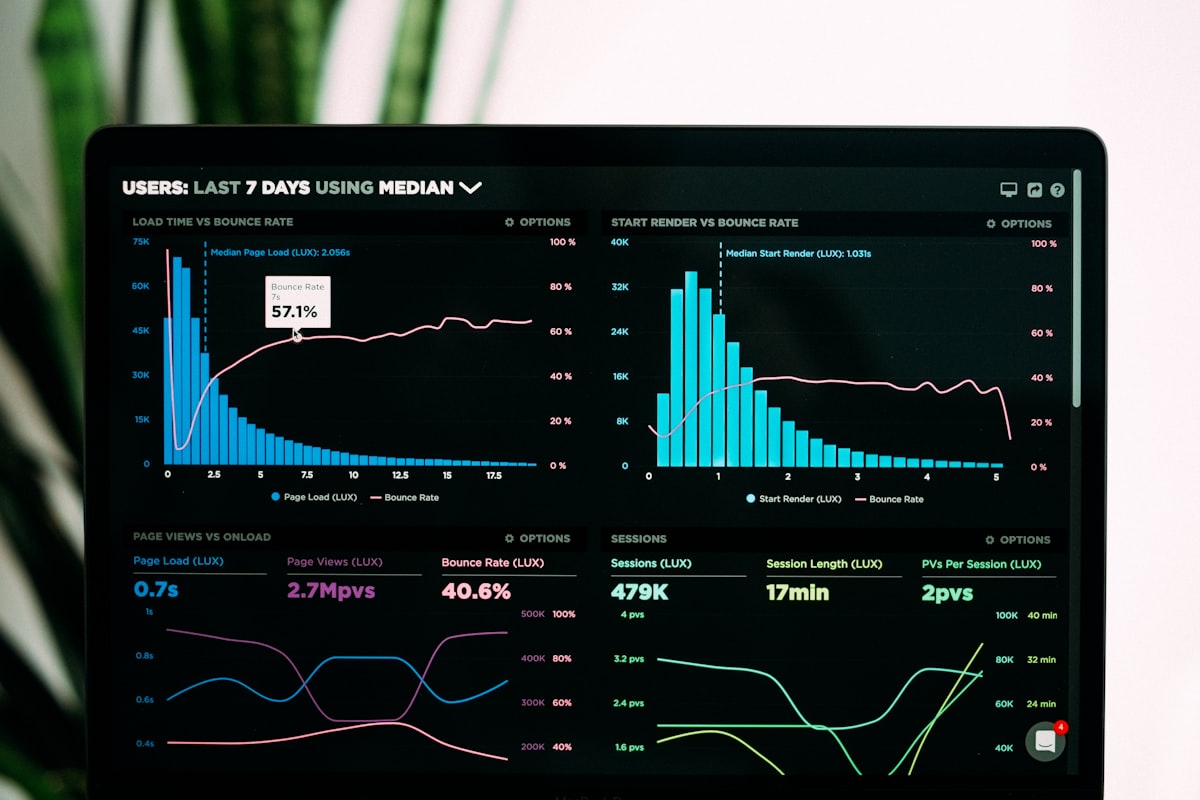
Traditional SEO tactics are producing diminishing returns. The rules have changed — not disappeared. Here is the honest breakdown of what still works, what does not, and what you need to add to your strategy.
